
INFO-697: UX DESIGN FOR AI
An AI-enabled bio-signal ritual system for embodied well-being
Soma connects a squeezable seed, a terrarium, and a companion app into one daily ritual. Ground in the moment, choose support when needed, and turn later reflection into a growing garden.
TEI ’26 Student Design Challenge Winner / Published in ACM
ROLE
Interaction design · UX research · Prototyping
TIMELINE
8 weeks · Fall 2025
TEAM
5 designers
OUTCOME
TEI ’26 Student Design Challenge Winner / Published in ACM


BACKGROUND
We began by looking across three approaches to stress support: app-led guidance, tactile objects, and wearable biofeedback. Each offered something valuable, but raised a different question about how care could fit into everyday life.

01
Mental well-being apps
Guided activities and reflection, accessed through a screen.
GAP
Screen-based support can ask for more attention when people have little to spare.
02
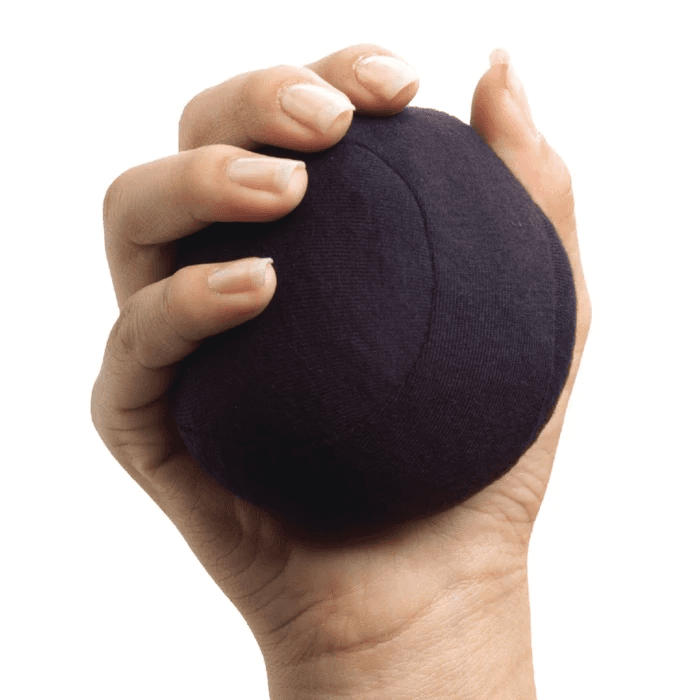
Tactile objects
Something tangible to hold, squeeze, or focus on.
GAP
Immediate tactile grounding is disconnected from reflection over time.

03
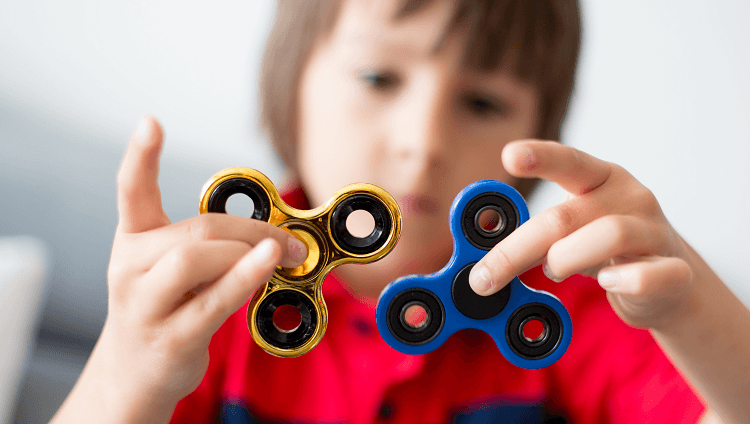
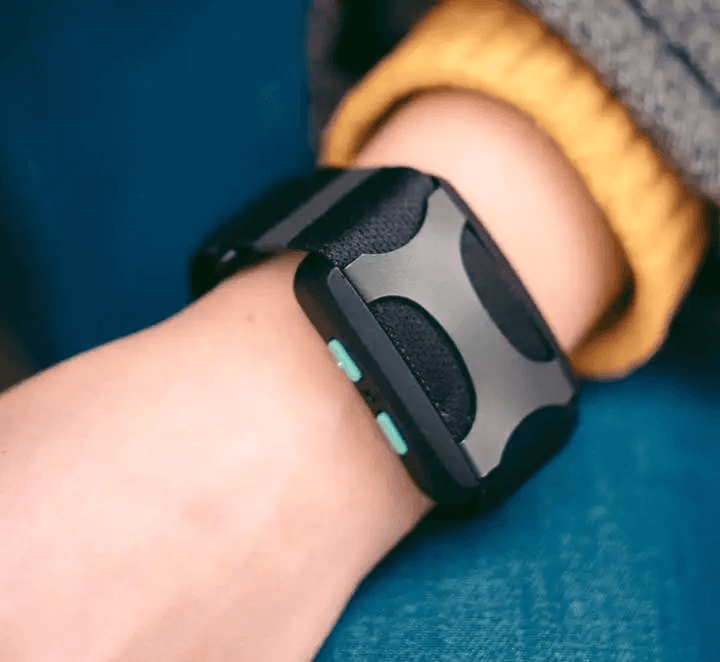
Wearable biofeedback
Physiological signals made visible as feedback.
GAP
Feedback can become another metric to manage, rather than a source of relief.
THE OPPORTUNITY
SOLUTION
Introducing Soma, a connected wellness ecosystem for grounding in the moment and growing through reflection.
Soma connects a squeezable seed, a companion app, and a terrarium into one experience. It begins with a small act of grounding, offers more support only when wanted, and leaves room to reflect later.

01 / PAUSE
Squeeze to ground
The SomaSeed provides a tactile starting point. Breath and light guide a brief pause without beginning with a screen.

02 / SUPPORT
Choose what comes next
A short check-in opens optional suggestions shaped by the moment. The user can stop, choose an activity, or ask for another.
03 / REFLECT
Return to the day
Returning the seed to its terrarium marks a quieter moment to reflect on what happened and how the person responded.
04 / GROW
See coping over time
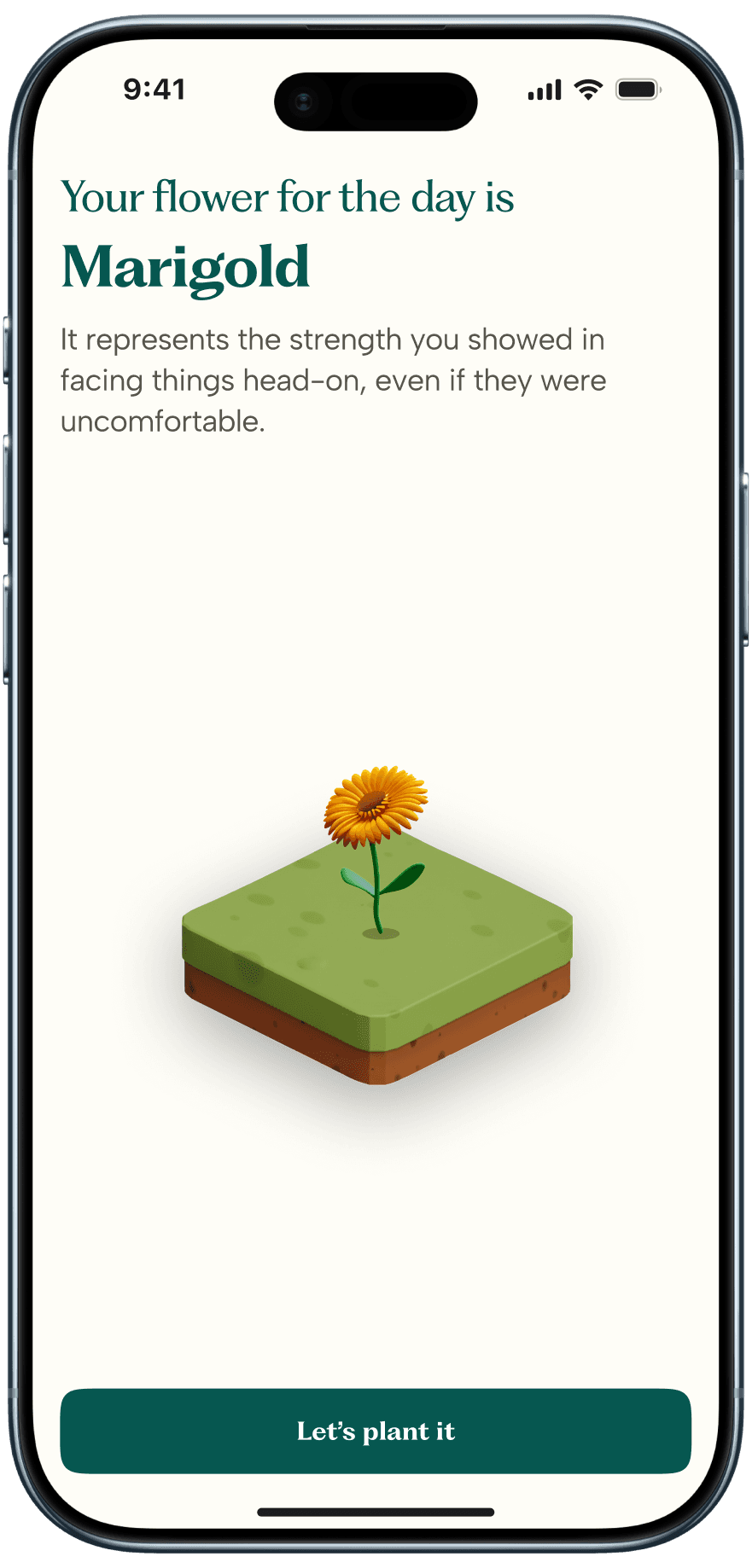
A flower carries the meaning of each reflection into a digital garden—a record to revisit, rather than a score to optimize.
RESEARCH
We interviewed 10 people about how stress appeared in everyday life, what they reached for when it hit, and how care fit around their routines. Across those conversations, three patterns emerged.
01 / FINDING
Under stress, people turned to activities they already knew: taking a walk, listening to music, gaming, or reaching for a notebook. Relief was often a small, familiar action rather than a new routine.
“Sometimes all I need is a small reset. A walk, a hot shower. I don’t want an app telling me how to feel.”
GAMER
02 / FINDING
Comfort was sensory and individual. Music, silence, scent, and texture could each offer relief, but the same experience did not feel grounding to everyone.
“Calming music and plushies really help me decompress. My roommate needs total silence. We’re complete opposites.”
GRADUATE STUDENT
03 / FINDING
Participants described wanting time for self-care, wind-down routines, and a consistent sleep schedule. Exams, deadlines, and demanding weeks made that consistency difficult to sustain.
“I wish I had more time to take care of myself, but my weeks are packed. I fall off the wagon every other Tuesday.”
ENGINEER
USER JOURNEY
Based on these insights, we designed a user journey for a proposed system that meets users in moments of stress, then grows with them over time.

AN INTERFACE YOU CAN HOLD
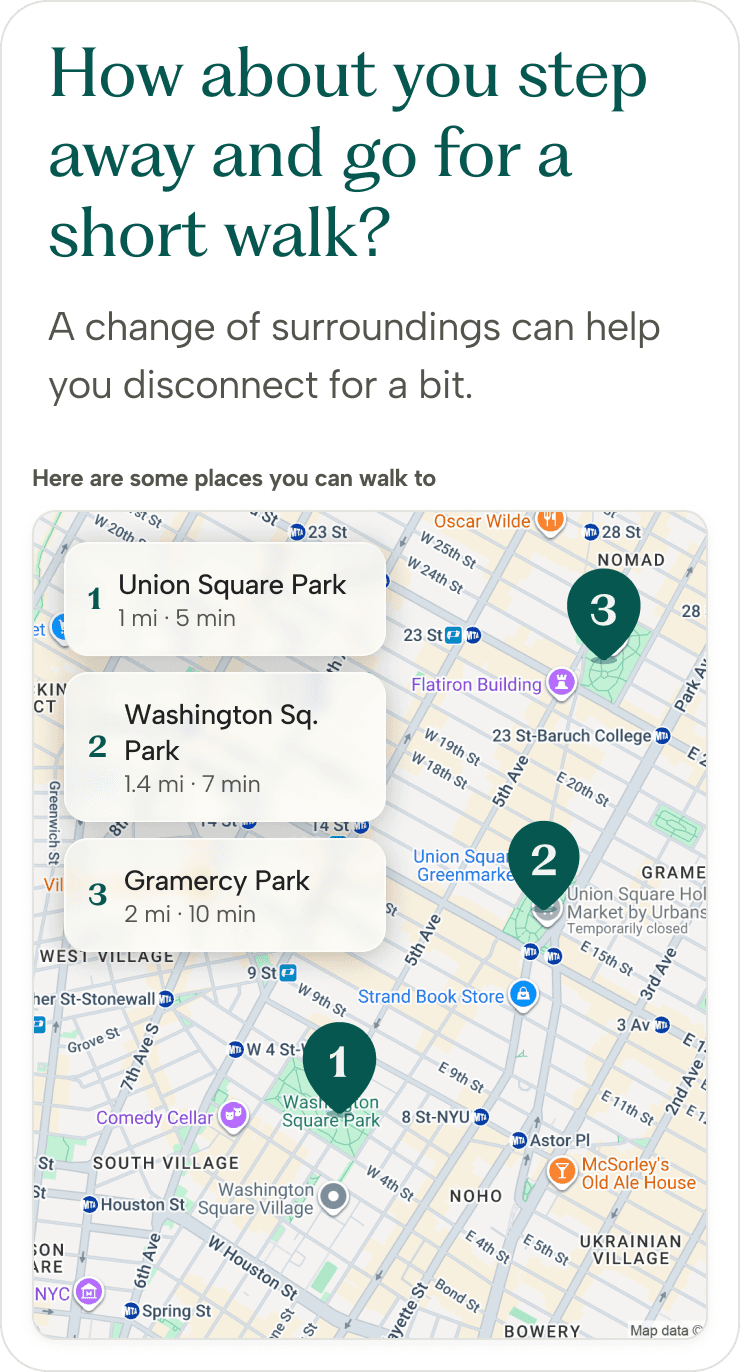
When someone is overwhelmed, another screen can become one more thing to interpret. We designed Somaseed as something you could simply reach for and squeeze — a soft, seed-like object that responds with a gentle glow rather than numbers, graphs, or notifications.
We imagined Somaseed responding to physiological signals over time, translating changes in the body into light. Our working prototype focused on the core interaction (squeeze and illumination) while biosignal sensing was simulated.

01 / IN THE MOMENT
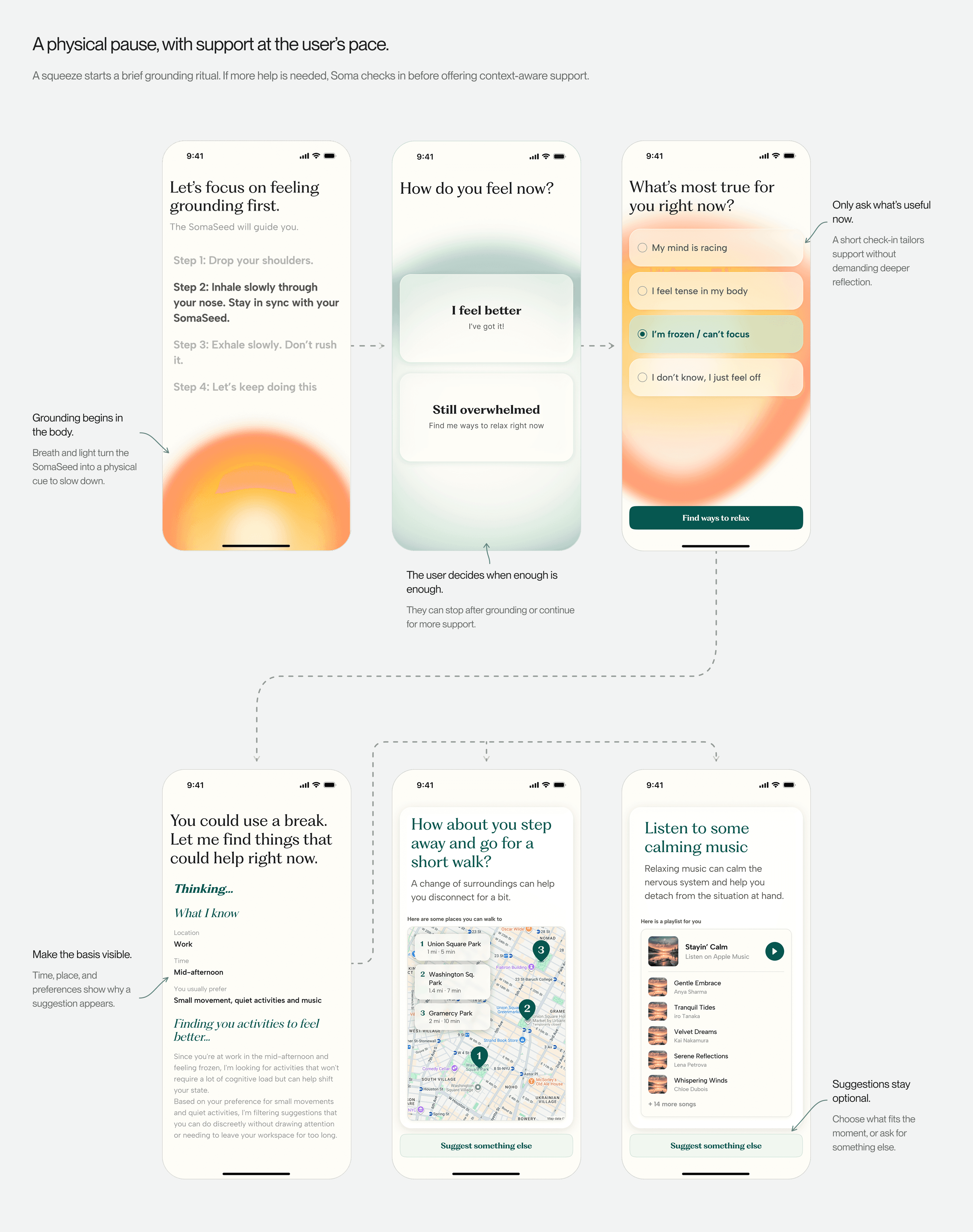
A squeeze starts a brief grounding ritual. If more help is needed, Soma checks in before offering context-aware support.
The key decision was not to escalate automatically. The check-in lets someone end the interaction after grounding or ask for more help. Making context visible and allowing another suggestion keeps support flexible, rather than treating the system’s first answer as the right one.
02 / AFTER THE MOMENT
We separated immediate relief from deeper reflection at the end of the day because explaining an experience while overwhelmed could make support feel like work. Revisiting those moments later gives the person more room to describe what happened and how they responded.

03 / OVER TIME
Each flower holds a day’s reflection. The garden offers a history without making consistency into a score or streak. Selecting a flower returns to a particular day, connecting the overview to its context rather than reducing coping to a performance trend.

FUTURE DIRECTION
Concept reactions gave us strong positive feedback, plus new questions to test.
Concept feedback suggested that the tangible ritual and garden metaphor resonated. It also opened possibilities beyond the experience we had prototyped. These were signals of interest—not evidence of reduced stress or sustained use.

I would love something like this in my life!
I love the metaphor of the garden. It makes me feel peaceful.
Could it also proactively tell me to look out for things that could make me feel stressed?
What if I could share this with my mom?
I would love to share this with my therapist.
What we’d explore next:
01 / ANTICIPATION
Could support arrive before stress peaks?
Participants asked whether Soma could help anticipate stressful situations. We would explore user-controlled prompts, when they feel helpful versus intrusive, and how to communicate uncertainty without presenting predictions as facts.
02 / SELECTIVE SHARING
Could reflection support conversations with others?
Interest in sharing with family and therapists raises questions of consent, privacy, and interpretation. We would test selective sharing: what a person wants to share, with whom, and what should remain private.
OUTCOME
What began as an eight-week UX Design for AI project became Soma: Bio-Signal Ritual System for Embodied Well-Being, winner of the TEI ’26 Student Design Challenge.
Read the paper ↗
TEI is the ACM conference on Tangible, Embedded, and Embodied Interaction. Its 2026 Student Design Challenge was a juried track for student-led prototypes and exploratory concepts, centered on “Sensory Rituals”: how tangible interactions and sensory experiences can support mental, emotional, and spiritual well-being. Soma was selected as a winner, with its paper published as an extended abstract in the ACM Digital Library.